
Complete Peptide Research Guide
How to Reconstitute Lyophilized Peptides
A complete research-use guide on how to mix peptides, how lyophilized peptide vials are handled, what bacteriostatic water does, how peptide solutions are stored, and how researchers approach Retatrutide reconstitution in laboratory settings.
Research Use OnlyNot for human or veterinary use.
Lyophilized PeptidesFreeze-dried research compounds.
COA TestedBatch documentation available.
USA & Canada ShippingFast fulfillment options.
Important Research-Use Disclaimer: Royal Peptides products are sold for laboratory research use only. They are not intended for human consumption, injection, medical use, veterinary use, diagnosis, treatment, or prevention of disease. This guide is educational and does not provide personal dosing, medical, or administration instructions.
Peptide Reconstitution Overview
Peptide reconstitution is the process of adding a suitable solvent to a dry lyophilized peptide so the compound becomes a liquid solution for laboratory research handling. People often search for this process using terms like how to reconstitute peptides, how to mix peptides, how to mix Retatrutide, or how much BAC water to add to peptides. In a proper research setting, reconstitution is not guesswork. It should be based on the peptide’s solubility, the study protocol, the required concentration, and the solvent compatibility of the compound being studied.
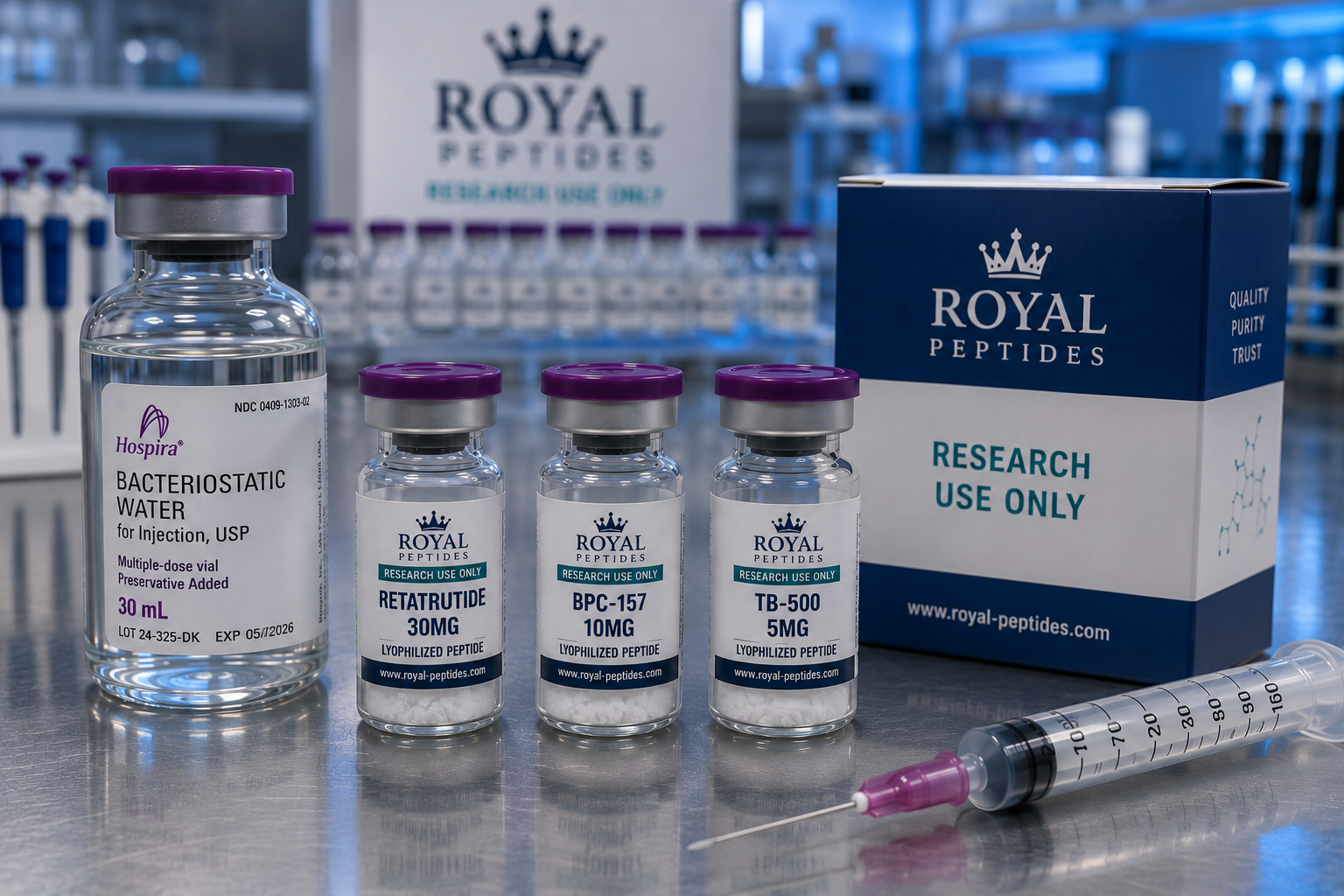
Lyophilized peptides are supplied as freeze-dried material inside sealed vials. Depending on the peptide and manufacturing process, the vial may contain a fluffy powder, compact cake, thin film, puck, or small visible residue. The visual amount of powder does not always reflect the actual peptide mass. A vial can look almost empty and still contain the correct labeled quantity.
What Does Lyophilized Peptide Mean?
A lyophilized peptide is a peptide that has been freeze-dried to remove moisture. This dry format is widely used because many peptides are more stable before they are dissolved. Once a peptide is in solution, it may become more sensitive to temperature, light, contamination, pH changes, and time.
Lyophilization helps support peptide stability during shipping and storage. It also allows researchers to reconstitute the compound only when needed. This is one reason many research peptide products are supplied as dry powder rather than pre-mixed liquid.
Dry-State Stability Lyophilized peptides are generally more stable before reconstitution than liquid peptide solutions.
Research Flexibility Researchers can select the solvent and concentration required for their protocol.
Batch Traceability Vials can be labeled, tested, and documented by batch number and COA.
How to Mix Peptides in Research Settings
The phrase how to mix peptides usually refers to reconstituting a lyophilized vial with a solvent such as bacteriostatic water, sterile water, or another validated laboratory solvent. The general research principle is simple: add the appropriate solvent slowly, allow the peptide to dissolve gently, avoid harsh shaking, label the vial, and store the solution according to the compound’s requirements.
However, not every peptide mixes the same way. Some peptides dissolve quickly. Others need more time. Some are more hydrophobic and may require special solvent conditions. Some peptides are sensitive to pH. Others may be affected by preservatives, salts, or repeated freeze-thaw cycles.
Research principle: The correct way to mix peptides depends on the compound, solvent, desired research concentration, storage conditions, and the protocol being followed.
General Peptide Mixing Principles
- Review the peptide name, vial strength, batch number, and COA before handling.
- Use a clean research workspace and appropriate lab supplies.
- Select a solvent that is compatible with the peptide and research method.
- Add solvent slowly rather than forcefully blasting the peptide cake.
- Allow the vial to dissolve gently.
- Avoid violent shaking, foaming, or unnecessary agitation.
- Label the vial with compound name, concentration, solvent, date, and batch.
- Store according to the peptide’s stability requirements.
| Step | Research Purpose | Why It Matters |
|---|---|---|
| Confirm vial and COA | Verify compound identity and batch | Prevents mix-ups and supports traceability |
| Select solvent | Match solubility and protocol needs | Wrong solvent may cause poor dissolution |
| Add solvent gently | Protect peptide cake and reduce foaming | Harsh handling may affect solution quality |
| Swirl, do not shake aggressively | Encourage gradual dissolution | Reduces bubbles and unnecessary stress |
| Label and store | Maintain research documentation | Improves reproducibility and safety |
What Is Bacteriostatic Water?
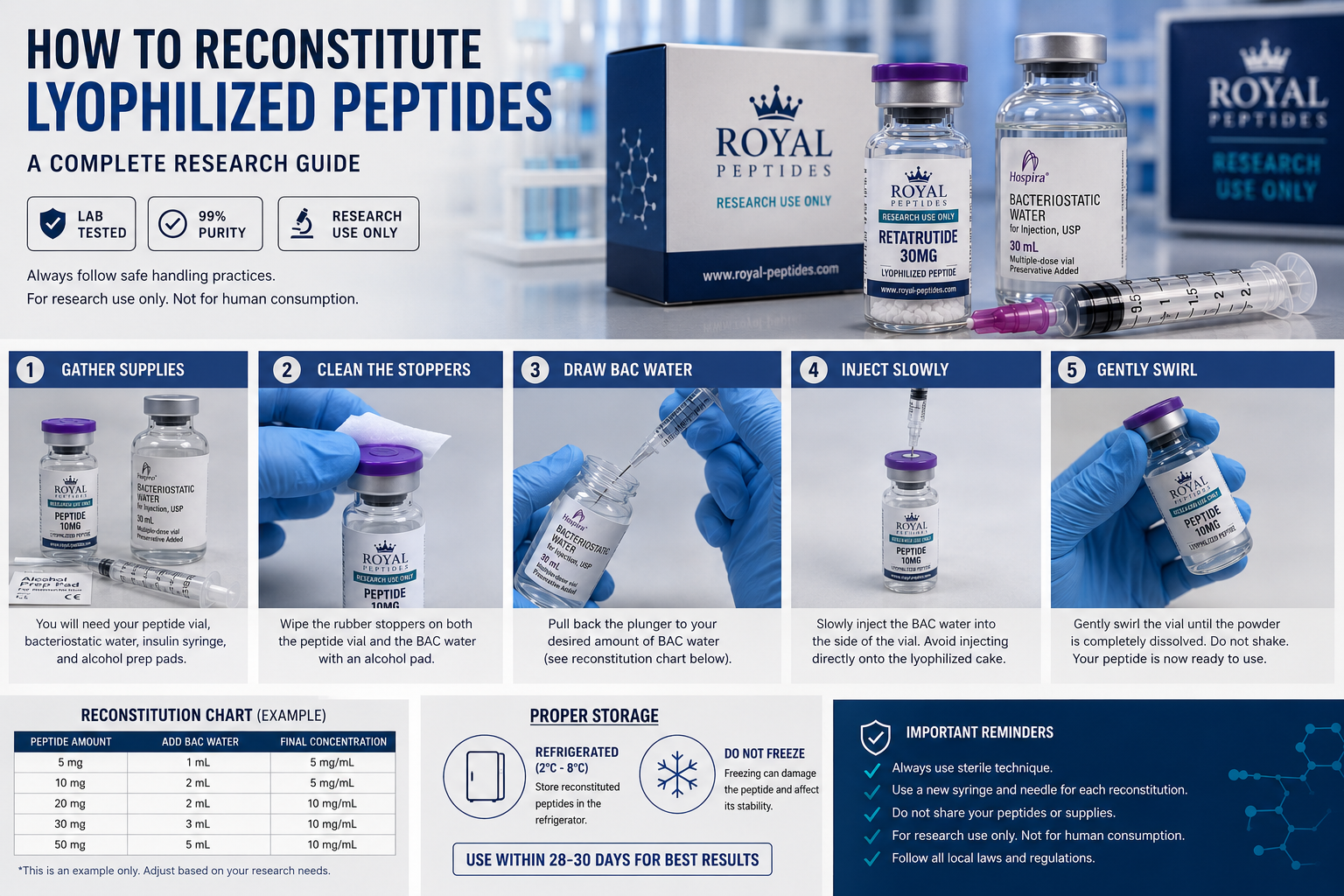
Bacteriostatic water, often called BAC water, is sterile water containing a preservative, commonly benzyl alcohol. In research settings, BAC water may be used when a solution is expected to be accessed more than once under appropriate laboratory conditions. The preservative helps inhibit bacterial growth, but it does not make poor handling safe and does not replace clean technique.
BAC water is commonly discussed in peptide reconstitution because many researchers use it as a convenient solvent for certain water-soluble peptides. However, it is not automatically the correct solvent for every peptide or every study. Some assays, cell systems, or analytical methods may require sterile water, buffered solution, acetic acid, DMSO, or another protocol-specific solvent.
For research planning, the solvent should be considered part of the experiment. The wrong solvent may affect peptide solubility, stability, pH, or downstream research results.
Related product link: Shop bacteriostatic water for research use.
Peptide Reconstitution Concentration
After reconstitution, peptide concentration depends on the amount of peptide in the vial and the amount of solvent added. In research documentation, concentration may be expressed as mg/mL, mcg/mL, mcg/µL, or molarity depending on the experiment.
For example, adding less solvent produces a more concentrated research solution. Adding more solvent produces a more dilute research solution. The correct concentration depends on the research protocol and should be calculated carefully.
Helpful tool: Use the Royal Peptides Peptide Calculator for research concentration planning.
How to Mix Retatrutide for Research Use
Retatrutide is one of the most searched research peptides, and many users look for terms such as how to mix Retatrutide, Retatrutide reconstitution, Retatrutide BAC water, and how to reconstitute Retatrutide. In a research-only context, Retatrutide reconstitution follows the same core principle as other lyophilized peptides: the compound is dissolved with a compatible solvent according to the required laboratory concentration and study protocol.
Retatrutide is commonly supplied as a lyophilized peptide vial. Before mixing, researchers should confirm the vial strength, batch number, COA, and intended research concentration. The solvent volume should be chosen based on the desired concentration, not by guessing.
Retatrutide Research Mixing Considerations
- Confirm whether the vial is Retatrutide 10mg, 15mg, 20mg, 30mg, 50mg, 60mg, or another research size.
- Review the COA and batch documentation before reconstitution.
- Choose a solvent compatible with the research protocol.
- Add solvent slowly and gently along the vial wall.
- Allow the lyophilized cake or powder to dissolve without aggressive shaking.
- Label the vial clearly after mixing.
- Store according to research stability requirements.
Important: This section is for laboratory research discussion only. It does not provide Retatrutide dosing, administration, or personal-use instructions.
| Retatrutide Vial Size | Research Planning Note | Helpful Link |
|---|---|---|
| Retatrutide 10mg | Often used when researchers need a smaller vial size for concentration planning. | View Retatrutide 10mg |
| Retatrutide 30mg | Common mid-range research vial size. | View Retatrutide 30mg |
| Retatrutide 60mg | Higher-strength research vial for larger protocol planning. | View Retatrutide 60mg |
| Retatrutide Bulk Kits | Useful for labs needing multiple vials from the same supplier. | View 10 Vial Bulk Kits |
For more Retatrutide research education, read: Retatrutide vs Tirzepatide: Key Research Differences.
How Much BAC Water Should Be Added to Peptides?
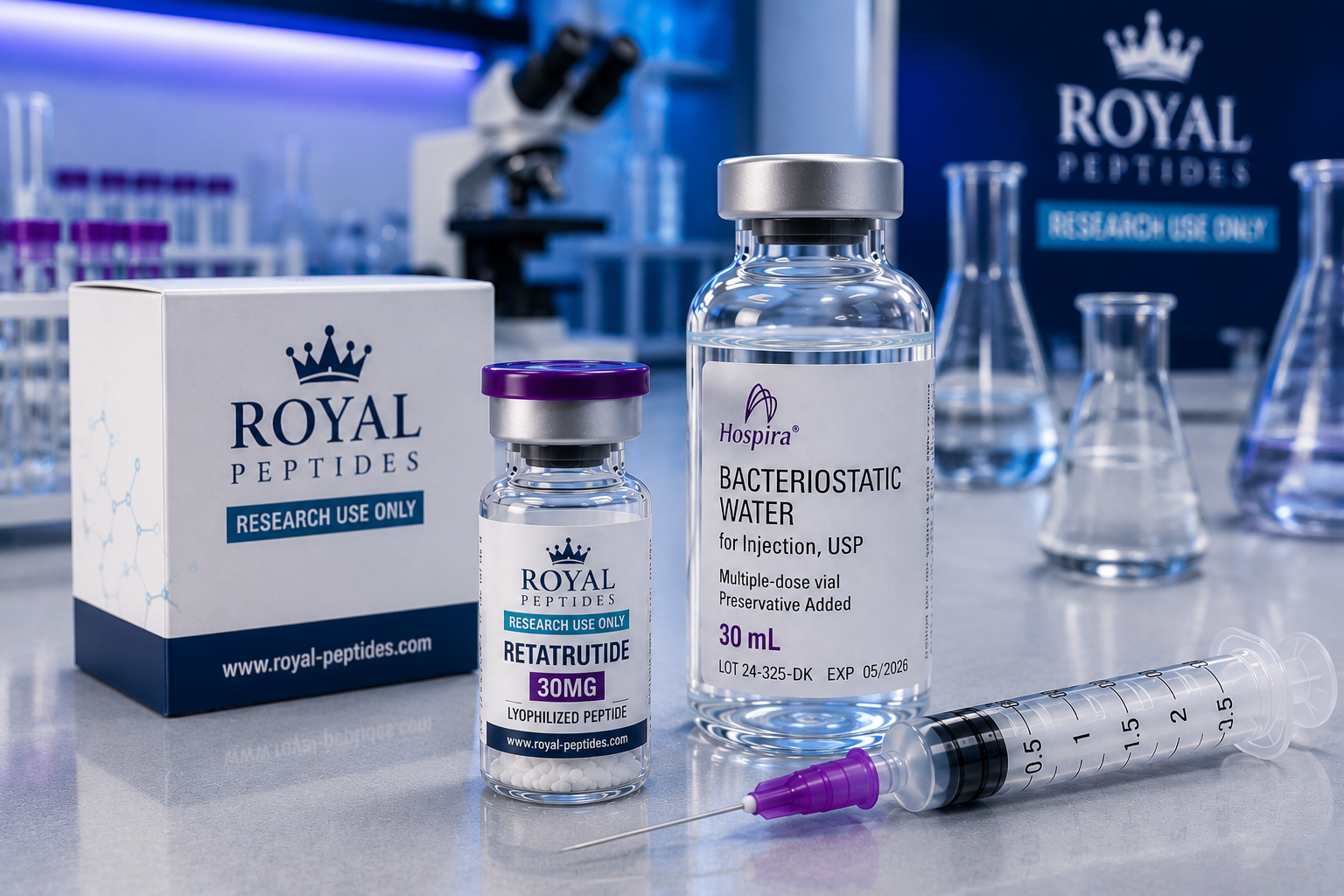
The amount of BAC water or solvent added to a peptide vial depends on the desired final research concentration. There is no single solvent volume that is correct for every peptide, every vial size, or every protocol. A 10mg vial, 30mg vial, 50mg vial, or 60mg vial will produce different concentrations depending on how much solvent is used.
When researchers ask “how much BAC water do I add?” the correct answer is: first decide the target concentration, then calculate the solvent volume. This is why a peptide calculator is useful. The calculator helps convert vial mass and solvent volume into concentration for research planning.
Use the Peptide Calculator to plan research concentrations.
How to Store Peptides Before and After Mixing
Storage is one of the most important parts of peptide handling. Lyophilized peptides are generally more stable than reconstituted peptide solutions, but they still need protection from heat, light, moisture, and repeated temperature changes.
Before Reconstitution
- Keep lyophilized vials sealed until ready for research use.
- Store according to supplier documentation and product requirements.
- Protect from high heat and direct sunlight.
- Avoid unnecessary warming and cooling cycles.
- Keep batch labels and COAs organized.
After Reconstitution
- Label the vial with compound name, solvent, concentration, date, and batch number.
- Store according to the peptide’s stability requirements.
- Protect light-sensitive compounds when needed.
- Minimize repeated freeze-thaw cycles if the protocol requires frozen storage.
- Discard solutions according to laboratory policy when stability is uncertain.
Common Mistakes When Mixing Peptides
1. Shaking the Vial Too Hard
Aggressive shaking can create foam and unnecessary stress. Gentle swirling and patience are generally preferred in research handling.
2. Using the Same Solvent for Every Peptide
Different peptides may require different solvents. Solubility depends on the peptide sequence, structure, pH, and research application.
3. Not Labeling the Vial
Every reconstituted vial should be labeled immediately. Poor labeling can cause serious research errors.
4. Ignoring the COA
COAs provide batch-specific testing information. Researchers should verify identity, purity, and batch documentation before beginning work.
5. Assuming Powder Volume Equals Peptide Amount
A small peptide cake does not mean the vial is underfilled. Peptide mass and visual powder volume are not the same.
6. Storing Mixed Peptides Incorrectly
Reconstituted peptides may be more sensitive than lyophilized peptides. Storage conditions should match the protocol and compound requirements.
Why Peptide Vials Sometimes Look Empty
One of the most common questions about lyophilized peptides is why some vials look like they contain very little powder. This can happen because peptide mass is small and lyophilized material can settle as a compact film, puck, or residue at the bottom or side of the vial.
Visual fill level is not a reliable way to judge peptide quantity. A 10mg or 30mg peptide vial does not need to look physically full. The correct way to verify the product is through labeling, batch information, and COA testing.
Peptide COAs and Testing
A Certificate of Analysis, or COA, is one of the most important documents for research peptide buyers. A COA may include purity, identity confirmation, HPLC data, mass spectrometry data, batch number, and testing date.
Before mixing any peptide, researchers should confirm that the product label and COA match the compound being handled. This is especially important when working with multiple peptide vials or bulk kits.
View testing information here: Royal Peptides COA Testing.
How to Choose a Research Peptide Supplier
Reconstitution starts with product quality. A properly labeled, tested, lyophilized peptide is easier to document, handle, and use in a research protocol. When comparing suppliers, researchers should consider more than price.
Third-Party Testing Look for batch documentation and independent testing when available.
Clear Product Labels Vial strength, compound name, and batch information should be easy to identify.
Reliable Fulfillment Fast shipping and secure packaging matter for research planning.
Royal Peptides offers research-use lyophilized peptides, 10 vial bulk kits, bacteriostatic water, blends, and third-party tested compounds for laboratory research customers.
Helpful links: Shop Research Peptides, Shop 10 Vial Bulk Kits, Wholesale Peptides, Quick Order Table.
| Text | URL | Purpose |
|---|---|---|
| Peptide Calculator | /peptide-calculator/ | Captures mixing and concentration searches |
| Buy Peptides Online | /buy-peptides-online/ | Commercial buyer intent |
| 10 Vial Bulk Kits | /product-category/bulk-kits/ | Order bulk sales |
| Retatrutide vs Tirzepatide | /retatrutide-vs-tirzepatide/ | Supports Retatrutide SEO cluster |
| Bacteriostatic Water | /product-category/bacteriostatic-water/ | Relevant reconstitution product |
| COA Testing | /coa/ | Trust and quality signal |
Frequently Asked Questions
What does reconstitute peptides mean?
Reconstituting peptides means adding a suitable solvent to a dry lyophilized peptide vial so it becomes a liquid solution for laboratory research handling.
How do you mix peptides?
In research settings, peptides are typically mixed by slowly adding a compatible solvent to the lyophilized vial, allowing the compound to dissolve gently, avoiding aggressive shaking, labeling the solution, and storing it according to protocol.
How do you mix Retatrutide?
For research use, Retatrutide is reconstituted by selecting a compatible solvent and solvent volume based on the desired research concentration. Researchers should verify vial strength, COA, batch number, and protocol requirements before mixing.
Can you shake peptide vials?
Aggressive shaking is generally avoided in peptide research handling. Gentle swirling and allowing time for dissolution are commonly preferred.
Why does my peptide vial look empty?
Lyophilized peptide mass can appear very small. A compact cake, film, or residue can still represent the correct labeled amount. COA and label information are more reliable than visual volume.
What is BAC water used for with peptides?
Bacteriostatic water is a sterile water solution containing a preservative. In research settings, it may be used as a solvent for certain peptides when compatible with the compound and protocol.
Are Royal Peptides products for human use?
No. Royal Peptides products are sold strictly for laboratory research use only and are not for human consumption, injection, medical use, or veterinary use.
Shop Research Peptides & Reconstitution Supplies
Explore lyophilized research peptides, 10 vial bulk kits, bacteriostatic water, blends, COA-tested products, and wholesale research supply options from Royal Peptides.
